
What Is Electability?
Thoughts on the eve of the Michigan primary
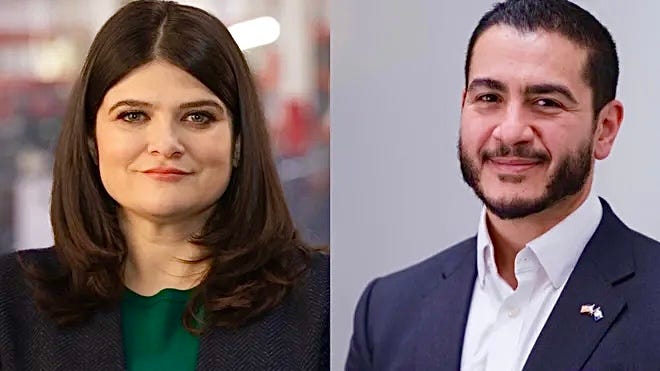
FIVE POPULAR ASSUMPTIONS THAT ARE NOT NECESSARILY TRUE
1. The default value of “electable” is “centrist.”
2. The default value of “independent voter” is “centrist.”
3. “Democrats are the left-wing party, Republicans are the right-wing party, and everyone else is in the middle.”
4. “Centrists do not alienate anybody, except for some spoilsports on the far left who obviously don’t count.”
5. “Leftist voters can be taken for granted, because when faced with a binary choice they’ll pick the Democrats.”
- - - - -
- On the eve of the 2026 Michigan Senate primary, there appears to be a LOT more enthusiasm for Abdul El-Sayed than for Haley Stevens. Why wouldn’t this enthusiasm carry over to the general? Is it that much harder to convince centrists than leftists to Vote Blue No Matter Who?
- Leftists (particularly those who oppose Israel) are used to being ignored, but they’re getting tired of it. Many of them do hold their nose & vote for centrists, but mainstream Democrats have long dismissed their concerns.
- Nevertheless, the pro-Palestine contingency exists. They can either vote for candidates they like in the Democratic primary, or find candidates in alternative parties who very likely have no chance of winning.
- Opposition to Israel is usually not motivated by hatred of Jews. It feels ridiculous to keep saying that, but there are people who refuse to believe this no matter how many times they hear it. Sadly, many of them are Democrats. (They tend to be older and more centrist.)
- “People Are Worried.” That’s the most common argument against El-Sayed. Sadly, there does not appear to be a definitive refutation of “People Are Worried.” Regrettably, many news outlets launder suspicions of Muslims and/or socialists through the premise of “People Are Worried.”
- If the Democrats collectively believed that Haley Stevens would be a stronger candidate to face off against Mike Rogers, that would play out in the primary. If the polls are true, that does not appear to be the case.
- I say the same thing to supporters of both candidates: Make your case, but respect the winner. (After this primary, I sincerely hope that is possible.)
- This is basically a tautology, but it’s true: the candidate who wins the most votes in the primary really does have the better chance to win the general election.
- There are a whole lot of voters unhappy with what the Trump administration is doing, and any Democrat who convincingly opposes his lackeys in the GOP should at the very least have a fighting chance of winning their votes.
- - - - - - - -
1) the DNC battles against democrat candidates more than they do republicans
2) if you look at polling Progressives Points (Health care, not being owned by AIPac, worker rights, women's rights) pretty much works and is popular in all parties (just not the DNC)
3) Look at the democrats in congress = only group that makes the republicans look young; drowning in lobbyist dollars; (see number 1) they are worried more about protecting their democrat turf and not gaining grounds.
I used to say that the republicans refuse to give people what they want, so instead they preach fear... and that is now the DNC
Years ago I read a quote from some asshole in the DNC that essentially said ---> "I don't worry about the Progressives & Leftists. They have nowhere to go." I have never stopped seething about that.
The "nowhere to go" reality may be about to change. I say ---> BRING IT ON!!!
For over a decade now I've envisioned a political rupture that effectively creates 5 political parties. The Progressive Leftists / The traditional Democrats / The middle-of-the road Centrists (who'll vote for anyone) / The sane Republicans / The MAGAs.
Possible? More so now than the day I flashed on it.
Welcome to "interesting times."